Catholic Symbols

Catholic Symbols


The Importance of Catholic Symbols

The content of this section of the website provides information on Catholic Symbols. The meanings, origins and ancient traditions surrounding Catholic Symbols date back to times when the majority of ordinary people were not able to read or write and printing was unknown. When Christian religious ceremonies were conducted entirely in Latin. Foreign or written words were therefore inappropriate for conveying the Christian message to the majorities. However the Catholic Symbols which were adopted enabled people, who adhered to the same Catholic Christian religion, could understand the meaning of a symbol regardless of understanding the written word or whatever country they were in. The use of Catholic Symbols made it possible for everyone to understand the figures and the messages which were portrayed in Christian art or in the images and objects included on stained glass windows or the actual architecture of Catholic Churches. 

Catholic Symbols - Significance and Representations
Catholic Symbols use signs and emblems to teach and present various concepts of the Christian religion. They also add elements of mysticism to the Catholic Christian religion. Catholic Symbols or, symbolism, provide clear graphic illustrations which represent people, saints and items of religious significance. Understanding the significance of Catholic Symbols and symbolism enables a fuller understanding of Christian Art and Architecture and what the symbols of faith represent in the Catholic religion.

Catholic and Christian Symbolism in the Medieval Bestiary - Significance and Representations
A Bestiary was a medieval book (usually illustrated) with allegorical descriptions of real and fabled animals. These descriptions, which included a description of various birds and animals and even plants, were often full of Christian and Catholic symbols and symbolism and contained a moral or religious lesson or allegory. Links are provided detailing the information regarding birds and animals found in the Aberdeen Bestiary.

Catholic Symbols - Information, Meaning and Definition
The following links provide access to the history, facts and information with the origins, meanings and definitions of Catholic Symbols.

Christian Symbols

Alpha and Omega
Anchor Christian Symbol
Angels
Ankh
Apple Christian Symbol
Ark of the Covenant
Ashes and Ash Wednesday
Aureole Christian Symbol
Banner Christian Symbol
Bells Catholic Symbols
Books
Bread And Wine
Burning Bush
Butterfly Christian Symbol
Candles
Cedar of Lebanon
Cross Christian Symbol
Chalice Christian Symbol
Christian Flag
Circle Christian Symbol
Coins Christian Symbol
Crown
Crown of Thorns
Crucifix and Crucifixion
Eye Christian Symbol
Fish Christian Symbol
Fleur-De-Lis Christian Symbol
 
Flowers as Christian Symbols
Gate Christian Symbol
Goat Christian Symbol
Halo Christian Symbol
Harp Christian Symbol
Heart Christian Symbol
Ichthus Christian Symbol

IHS Christian Symbol
INRI Christian Symbol
Keys Christian Symbol
Kiss Christian Symbol
Lamb Christian Symbol
Noah's Ark
Meaning of Numbers
Olive Branch
Palm Catholic Symbols
Pearls Christian Symbol
Plants and Trees Christian Symbols
Rainbow
Relics as Christian Symbols
Rock
Scales Catholic Symbols
Stars as Christian Symbols
Symbolism of Colors
Symbolism of Precious Stones
Tower Catholic Symbols

Catholic Symbols

Symbolism in the Medieval Bestiary - Significance and Representations
The following links provide access to the facts and information about the symbolism and moral, religious lessons and allegories found in the Aberdeen Bestiary:
 

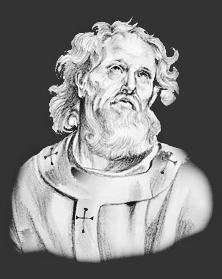
Symbols and Icons associated with Saint Peter ( See above Picture)
The image of the Catholic Saint Peter at the top of the page illustrates how symbols and icons are represented in Christian and Catholic Art. Saint Peter is depicted holding keys, the  Keys of St. Peter, a symbol and an emblem of the Catholic Church which represents the divine authority invested in the apostle Peter before the death of Christ. The crossed keys symbol was formerly used as a symbol or an emblem of the ancient Roman God Janis and the Mithraic God Zurvan (Iranian) who were both gods of time and keepers of doorways, and removers of obstacles. The keys were symbols of these ancient gods and then used as an emblem for Saint Peter. This symbolism led to the legend of Saint Peter as the bureaucratic keeper of the "pearly gates."

 Christian Symbols

  • The Importance of Catholic Symbols and Icons in Religious Art

  • Catholic Symbols - Information, Meaning and Definition

  • Religious symbols and Icons

  • Symbols, Symbolism and Icons

  • Christian Catholic symbols, icons, religion and faith

  • Ancient history, meanings and practices of the church

  • Facts, Information, Meanings and Definitions about Catholic symbol and icons

  • Significance and representations of symbols and icons

Catholic Symbols - Christmas - Ancient - Meanings - Practices - History - Religion - Faith - Symbol – Symbols - Symbals - Symbal - Religious - Fish - Catholic Symbols - Christmas Origins - Free - Church - Christmas - Chrismas - Icons - Icon - Xmas - Symbolism - Symbolic - Christianity - Christian - Catholic - Ancient - Meanings - Practices - Catholic Symbols - Christmas History - Religion - Faith - Symbol – Symbols - Symbals - Symbal - Religious - Fish - Origins - Free - Church - Christmas - Chrismas - Icons - Icon - Xmas - Catholic Symbols - Christmas Symbolism - Symbolic - Christianity - Christian - Catholic - Catholic Symbols - Christmas

Catholic Symbols

Information on Catholic Symbols

eXTReMe Tracker

Information on Catholic Symbols